3 hours ago
Jenn Soto’s Queer Joy Is Rewriting the Rules of Street Skateboarding
READ TIME: 7 MIN.
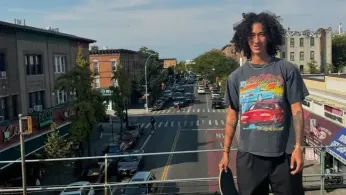
Jenn Soto has become one of the most visible queer professional skateboarders in the world, known both for her powerful technical skating and for her commitment to creating more inclusive spaces in a historically male‑dominated sport. Born in the Bronx and raised in Jersey City, New Jersey, she rose from local skate parks to global contests and brand campaigns, while speaking openly about identity, community, and mental health as part of her public work.
Jenn Soto was born on May 10, 1996, and is an American professional street skateboarder who rides goofy‑footed. She first started skating in sixth grade after watching a cousin land a trick, a moment she has described as the spark that pulled her away from burnout in competitive gymnastics and into the freedom of street skating. Growing up skating in Jersey City, she immersed herself in local crews and parks, navigating an environment where women and queer people were often underrepresented.
As her skills progressed, Soto moved from local sessions to major contests and video parts, building a reputation for smooth style, technical ledge tricks, and calm composure under pressure. She has since been based in Los Angeles, California, where she continues to film video projects and skate in high‑profile events.
In recent years, mainstream LGBTQ+ media has highlighted her as a prominent queer athlete. A December 2025 feature by Queerty described Soto as a “queer skateboarder who serves up gnarly tricks and spirited activism, ” emphasizing how she found personal freedom at the skate park and now uses that freedom to advocate for others in the community. The article noted that she is openly queer and frames her visibility as a way to help younger LGBTQ+ skateboarders see themselves in the culture of the sport.
Soto’s competitive résumé has played a major role in elevating her platform. In 2018, she won the Street League Skateboarding Pro Open in London, one of the most significant street contests in the world, which drew international attention to her skating. That same year she placed second at Dew Tour Long Beach, another premier event in street skateboarding, and earlier finished second at Exposure Street Pro 2017, a contest focused on advancing women’s skateboarding.
Her consistent results and style led to further recognition. In March 2019, USA Skateboarding named Soto one of 16 skaters on its inaugural U. S. National Skateboarding Team, formed to support athletes in qualifying for the Tokyo 2020 Olympic Games in the Women’s Street division. According to the national team announcement, team members received structured support and resources as they pursued Olympic qualification, marking a milestone in the formal recognition of street skateboarders as elite athletes.
Outside of national‑team structures, Soto has also been a fixture in major professional circuits, including X Games and Street League, which Adidas highlighted when it introduced her as part of its “Team Superstar” roster. Adidas’ profile of Soto noted that she “first came on to the scene at the X Games and Street League—the two biggest televised professional skateboard contests”—and framed her as a central figure in a new generation of street skaters.
Soto’s impact extends beyond contest results into storytelling and representation through brand collaborations. She is a sponsored rider for Adidas Skateboarding , a partnership that has featured her in campaigns and travel projects around the world. In an interview with Complex, she discussed how early skate shop jobs and local support eventually led to sponsorship and international trips with Adidas, describing those experiences as moments that helped her understand the broader reach of her story and the importance of giving back to supporters.
Soto has also worked with Thunder Trucks , a prominent skateboard truck company, which profiled her in a feature about her journey from working at her local skate shop “Classic” to turning pro. In that piece, she recounted putting a pair of Thunder trucks on her board as a teenager and never switching, a detail the brand used to underscore her long‑term connection to core skateboarding hardware culture.
Media outlets focused on skate culture have framed Soto as both an athlete and a symbol of “pure happiness” and calm in high‑stakes environments. A profile by Skateism titled “Pure Happiness: Jenn Soto” explored how she maintains composure amid cameras, moneyed contests, and expanding commercial attention. The article emphasized her focus on staying grounded, connected to friends, and centered on the simple joy of skateboarding, even as her profile rose.
In a “Voice of Freedom” feature from VHSMAG, Soto spoke about filming her own video project and being based in Los Angeles, with the piece highlighting the positive energy she brings to sessions and her growing influence in global skateboarding media.
Recent long‑form interviews have shed light on how Soto understands her intersecting identities as a queer Puerto Rican woman in skateboarding and how those identities inform her approach to community. In a 2024 feature interview with Galore Magazine titled “The Girl Who Redefined Skateboarding: Identity, Rebellion, and Culture with Jenn Soto, ” she described skateboarding as a way to express identity and connect with others, rather than just a competitive sport.
In that Galore Magazine interview, Soto discussed how her Puerto Rican heritage shapes her relationship with skateboarding, saying that being Puerto Rican is tied to her rhythm, energy, and communal approach to the skatepark. She portrayed skateboarding as inherently communal—about sharing space and supporting each other—aligning that outlook with her cultural background and with her broader focus on marginalized communities.
Soto has been involved in “Nuestra Cultura al Mundo, ” a project highlighted in the Galore Magazine piece that celebrates culture as a “living legacy” and spotlights Latinx creativity and leadership within skateboarding. She described her role in the project as an opportunity to mentor younger skaters, create safe and inclusive spaces, and ensure that emerging voices—especially girls, queer youth, and skaters of color—know that they do not have to fit any mold to belong.
The Galore Magazine interview also referenced a short film about Soto’s life and work, created by filmmakers Gabriella Lamb and Andres Norwood, which she said made her feel proud and reminded her how far she had come with the support of her community. That film was presented as an intimate look at her journey, connecting personal history, cultural identity, and professional progression into a single narrative aimed at amplifying underrepresented stories in skateboarding.
According to Queerty, Soto emphasizes that skateboarding gave her a place to explore and affirm her queer identity, turning the skatepark into a space of both physical and emotional freedom. The Queerty article highlighted how she speaks about mental health, resilience, and vulnerability, themes that resonate strongly within LGBTQ+ communities that often face additional stressors and stigma. In that coverage, her activism is framed less as formal campaigning and more as everyday visibility, mentorship, and openness about her life as a queer athlete.
Within the broader landscape of LGBTQ+ sports representation, Soto’s role is significant because she operates at the intersection of multiple underrepresented identities: she is a woman in a male‑dominated discipline, a queer person in a historically heteronormative subculture, and a Latina in a space where Latinx skaters have often been under‑credited.
In interviews, Soto has connected these layers of identity to a larger mission of expanding who feels welcome in skateboarding. She has described “community” as evolving from a small crew of friends to a broader responsibility to create safe, inclusive environments for the next generation. That includes encouraging girls and queer youth to take up space at parks, supporting local events, and reminding skaters that their own stories matter, even if they do not align with traditional images of who a “real skater” is.
Her collaborations with other Latinx skaters, such as work alongside Diego Nájera described in the Galore Magazine interview, also serve to challenge stereotypes about Latinx representation in skate media. Soto and Nájera are portrayed as redefining how Latinx skaters are seen, emphasizing pride in their roots and a shared commitment to community‑centered skateboarding.
For LGBTQ+ audiences, stories like Soto’s provide concrete examples of how queer and trans people can not only participate in action sports but lead them at the highest levels. Queerty framed her career as evidence that queer joy and resistance can coexist in a single practice—landing difficult tricks while also insisting on emotional honesty and care for others at the session.
In her Galore Magazine interview, Soto spoke about the future of her cultural work, saying she hopes projects like Nuestra Cultura al Mundo will continue to grow and reach people beyond traditional skate audiences, including anyone who believes in community and creativity. She expressed a desire to help ensure that the next generation of skaters never questions whether they belong, emphasizing empowerment, connection, and pride as the legacy she wants to leave.
Editorial coverage from outlets such as Skateism, VHSMAG, Adidas’ official blog, Complex, Galore Magazine, and Queerty collectively portrays Soto as moving into a stage of her career that balances competitive ambition with a strong focus on storytelling and mentorship. Through short films, interviews, and ongoing brand partnerships, she continues to bring queer, Latinx, and women’s perspectives into the mainstream of skate media.
As queer and trans visibility in sports remains a contested issue in many parts of the world, the sustained, high‑profile presence of athletes like Jenn Soto in global skateboarding offers a concrete example of how inclusive representation, community‑centered values, and elite performance can coexist. Her story—rooted in a Bronx childhood, Jersey City skateparks, and international competitions—demonstrates how LGBTQ+ athletes are reshaping action sports, one line and one community project at a time.