October 13, 2025
Political Notebook: Newsom vetoes PrEP access bill
Matthew S. Bajko READ TIME: 6 MIN.
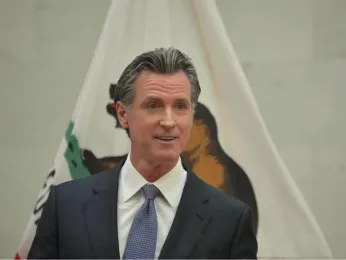
Governor Gavin Newsom vetoed a bill its author had hoped would give Californians easier access to HIV prevention medications as of January 1. But on Monday, October 13, Newsom jettisoned the legislation known as the PrEPARE Act of 2025.
The acronym in the name of Assembly Bill 554 stood for the Protecting Rights, Expanding Prevention, and Advancing Reimbursement for Equity. Gay Assemblymember Mark González (D-Los Angeles) had authored it with the aim of preventing health care plans and insurance companies from requiring prior authorization or step therapy for antiretroviral drugs, devices, or products that are approved by the United States Food and Drug Administration for PrEP, or preexposure prophylaxis, and PEP, or postexposure prophylaxis. Both are successful methods for preventing the transmission of HIV.
It also would have required a health care service plan to cover the HIV preventative drugs furnished by a pharmacist, including the pharmacist’s services and related testing ordered by the pharmacist. Both pharmacists at in-network pharmacies and pharmacists at out-of-network pharmacies would have been covered if the health care service plan has an out-of-network pharmacy benefit or in cases of a medical emergency.
Medi-Cal managed care plans would not have been impacted. Yet Newsom refused to allow AB 554 to become law.
In his veto message, Newsom raised concerns about the law’s impacts on affordability should it become law due to provisions in the federal Affordable Care Act.
“By exceeding the cost-sharing provisions under the ACA, this bill would result in increased costs to health plans, which would then be passed on to consumers,” wrote Newsom. “At a time when individuals are facing double-digit rate increases in their health care premiums across the nation, the state must weigh the potential benefits of all new mandates against the comprehensive costs to the entire care delivery system.”
While praising Newsom for signing into law a majority of its priority legislation this year, statewide LGBTQ rights organization Equality California expressed disappointment in Newsom’s decision to veto AB 554 in light of the Trump administration’s efforts to “dismantle federal protections for HIV prevention.”
As such, “California should be doing everything possible.” stated gay EQCA Executive Director Tony Hoang, to ensure “people at risk of HIV could obtain PrEP quickly and affordably.”
Other HIV, health care bills signed
Newsom did enact several bills aimed at improving HIV prevention, and health care in general, in the Golden State ahead of his October 13 deadline to either sign bills adopted by the Legislature this year into law or veto them.
AB 309 authored by gay Assemblymember Rick Chavez Zbur (D-Hollywood) deletes the pending January 1, 2026 repeal date of state laws that give pharmacists the discretion to furnish sterile syringes to people age 18 and up and that allow adults to possess syringes for personal use without a prescription. Local governments since 2004 were given permission by the state to authorize pharmacies to sell syringes to adults as a measure to halt the spread of HIV, viral hepatitis and other bloodborne pathogens due to dirty needles shared by injection drug users.
Newsom signed the bill October 13. The rules for furnishing the syringes are now extended indefinitely.
Senate Bill 278 by gay state Senator Christopher Cabaldon (D-Yolo) allows the disclosure of the health records of people living with HIV or AIDS to the state’s Medi-Cal program in order to improve the care they are receiving. It also allows the disclosure of HIV test results for the purpose of administering quality improvement programs under Medi-Cal.
It became law with Newsom’s signature on October 13. Newsom on October 6 had signed Cabaldon’s SB 351 that empowers the California Attorney General’s office to investigate and intervene in cases where private equity firms unduly influence medical care.
Due to the law, private equity groups or hedge funds are banned from interfering with the professional judgment of physicians or dentists in making health care decisions. With such entities “increasingly acquiring medical and dental practices,” Attorney General Rob Bonta noted that, “In the process, they are often putting profits above patients.”
A Democrat who will be seeking reelection next year, Bonta in supporting Cabaldon’s bill stressed that, “Medical decisions should be based on what’s best for the patient – full stop.”
Two bills aimed at reining in prescription drug costs that Newsom signed were authored by gay state Senator Scott Wiener (D-San Francisco) after his previous similar legislative efforts stalled. On October 13 Newsom signed SB 40 caps monthly copays for insulin at $35.
SB 41, which Newsom signed October 11, imposes new regulations on pharmacy benefit managers, such as prohibiting them from steering patients to affiliated pharmacies and instead allowing patients to choose the in-network pharmacy that best meets their needs. Known as PBMs, the businesses will now need to be licensed through the California Department of Insurance and follow new rules limiting how they charge fees and impose greater transparency on their pricing.
“This bill, together with related efforts in the 2025 budget and CalRx, represents the most aggressive effort in the country to lower prescription drug costs,” stated Newsom. “California continues to lead the way in lowering costs, increasing transparency, and ensuring that the savings are passed on to payers and consumers.”
Wiener expressed his gratitude to Newsom for signing the bill, which he hopes will not only benefit patients but also locally-owned pharmacies.
“With SB 41, California is standing up for consumers against giant mega corporations trying to rip them off on essential medications,” stated Wiener. “This new law builds on the licensing framework we established earlier this year to begin holding PBMs accountable for abusive behavior.”
The Pharmaceutical Care Management Association, however, bashed the signage of what it termed a “misguided bill” and predicted it would result in higher health care costs for employers who provide coverage and patients who need medications.
“It is a failure of the Newsom administration to fall for Big Pharma’s ploy to blame their high list prices on others and to undermine the very mechanisms that actually lower prescription drug costs,” stated the lobbying group for pharmacy benefit companies. “Nothing in SB 41 will lower drug costs for Californians. In fact, the legislation will increase drug costs for everyone in California.”
LGBTQ people will find it easier to take time off from work to care for a chosen family member due to SB 590 by Senator María Elena Durazo (D-Los Angeles). Newsom signed it October 13.
The state’s paid family leave program will be updated so employees, beginning on July 1, 2027, can receive wage replacement benefits for up to eight weeks when taking time off to care for a seriously ill chosen family member who is not a blood relative, child, or their significant other. Several years ago, the state had expanded certain family leave provisions to include chosen family members but it did not cover the PFL income.
LGBTQ homelessness bill signed
Addressing the needs of California’s unhoused LGBTQ individuals will be given greater priority due to Newsom’s signing AB 678 on October 10.
Numerous studies over the years have shown LGBTQ individuals, from youth to adults, are at risk of losing their housing.
As noted by the National Coalition for the Homeless on its special webpage for the LGBTQ community, the general youth population is only 10% LGBTQ yet up to 40% of homeless youth are queer or trans. It also highlights a study by the LGBTQ think tank the Williams Institute at UCLA School of Law that found 17% of LGBTQ community members were unhoused at one point in their lives.
As the Bay Area Reporter noted in a story last year about the first statewide survey of California’s LGBTQ seniors, roughly one in eight of the respondents said they worried they could lose their current housing. A Milken Institute report released in the spring noted that 40% of LGBTQ+ older adults live below the federal poverty line, set at an annual income of $15,560 for a single person, putting them at risk of being unable to afford their rent.
Due to AB 678, authored by bisexual Assemblymember Alex Lee (D-San Jose), the state’s Interagency Council on Homelessness must coordinate with LGBTQ+ community leaders to deliver by July 1, 2027, a plan for providing inclusive and culturally competent services to LGBTQ+ people experiencing homelessness.
Web Extra: For more queer political news, be sure to check http://www.ebar.com Monday mornings for Political Notes, the notebook's online companion.
Keep abreast of the latest LGBTQ political news by following the Political Notebook on Threads @ https://www.threads.net/@matthewbajko and on Bluesky @ https://bsky.app/profile/politicalnotes.bsky.social .
Got a tip on LGBTQ politics? Call Matthew S. Bajko at (415) 829-8836 or email [email protected].